
Three things to know
- The preparation is designed for the lower bowel. It is not intended to clear the upper part of the colon for examination.
- One or two enemas are usually used to prepare the lower bowel. Flexible sigmoidoscopy does not usually require the full oral bowel preparation used for a complete colonoscopy.
- The examination is generally shorter than a colonoscopy. Light sedation is an option, and some people choose no sedation.
Watch the comparison
39 seconds · English narration and captions
Skip to a section
Read the transcript
Why might you need a flexible sigmoidoscopy rather than a colonoscopy?
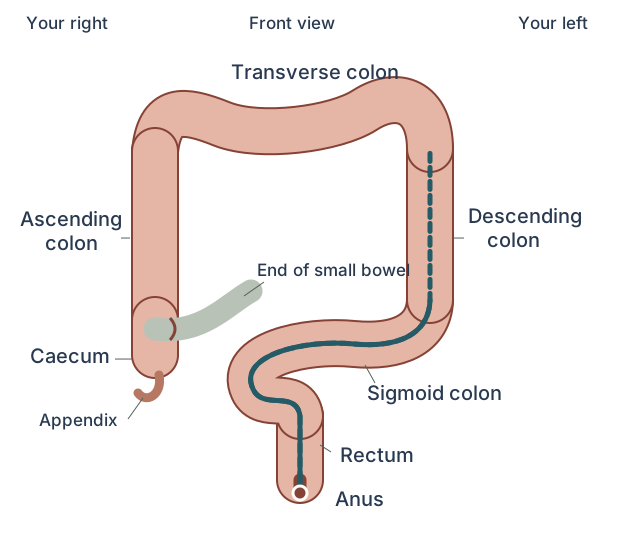
Flexible sigmoidoscopy looks at your rectum and sigmoid colon. Sometimes it reaches the descending colon too.
Enemas clear this lower section of bowel. It is a shorter test, with light sedation or none.
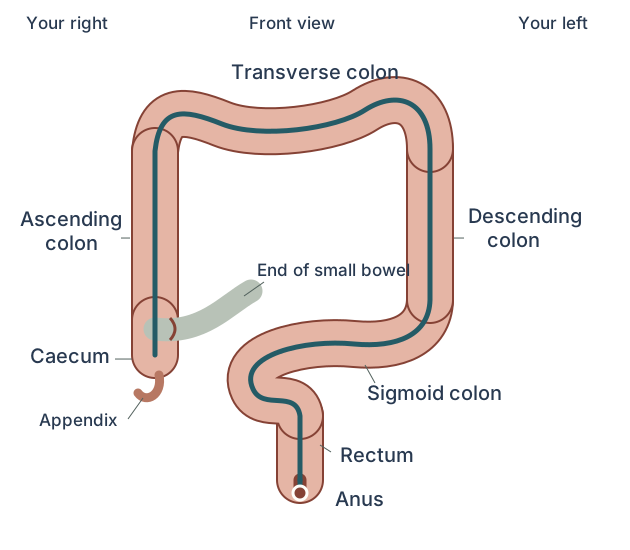
Colonoscopy aims to examine your whole colon, so it needs full bowel preparation.
The shorter test can investigate rectal bleeding in selected patients, or check known inflammation in the lower bowel. Problems further up may need a colonoscopy. Follow your provided instructions.
Why might I recommend the shorter test?
Sometimes a complete colonoscopy is not needed to answer the clinical question. A limited examination may be enough and usually needs less preparation. The choice depends on your symptoms, previous tests and the area that needs checking.
Investigating selected cases of rectal bleeding
Looking at the rectum and lower colon can identify inflammation, polyps or another bleeding source. Bleeding is not always due to haemorrhoids; other symptoms, blood tests or history may make colonoscopy more suitable.
Checking known lower-bowel inflammation
For someone with colitis (inflammation of the colon), flexible sigmoidoscopy can assess lower-bowel inflammation and response to treatment. This is different from colonoscopy for cancer surveillance.
Rechecking a specific area
A previous examination or scan may show a lower-bowel area needing closer inspection or biopsy. The planned reach should cover that area.
Where does the camera go?
The camera enters through the anus, passes into the rectum and follows the bowel lining.
The actual reach depends on the clinical aim, bowel shape, preparation and comfort. The report records how far the examination went.
Colonoscopy aims to examine the whole colon to the caecum, when possible. The end of the small bowel, called the terminal ileum, can sometimes also be examined.
Flexible sigmoidoscopy
Colonoscopy
Flexible sigmoidoscopy or colonoscopy?
| Feature | Flexible sigmoidoscopy | Colonoscopy |
|---|---|---|
| What is examined? | Rectum, sigmoid and sometimes descending colon. | The whole colon, when possible. |
| Preparation | Enemas clear the lower bowel for the intended examination. | Full bowel preparation clears the whole colon. |
| Comfort and sedation | Shorter procedure; light sedation or no sedation may be chosen. | A longer examination; sedation is discussed individually. |
Colonoscopy may be more appropriate when symptoms, blood tests, stool tests, family history or previous findings suggest that the rest of the colon needs examining. Examples include unexplained iron-deficiency anaemia, a positive screening FIT or recommended polyp surveillance. These need individual assessment.
Preparing with enemas
An enema is usually given at the endoscopy unit shortly before the procedure.
This clears out the rectum, sigmoid and sometimes descending colon. Occasionally, a flexible sigmoidoscopy may still require a full bowel preparation; if so, this will be explained clearly before the procedure.
Follow your own eating, drinking and fasting instructions. Contact the endoscopy team before the appointment if the instructions are missing or unclear. Tell the team about kidney or heart disease and relevant previous surgery.
Medicines
Provide a current medicine list, including blood thinners, diabetes medicines and weight-loss injections. Do not stop them on your own. If a medicine needs to be withheld, your instructions should state when to stop and when to restart it.
Getting there and home
Check the location on your appointment letter. If you plan to have sedation, arrange collection and the support specified in your instructions. Raise transport difficulties before the day.
Will I need sedation?
Light sedation or no sedation are both options. Tell the team about anxiety, a previous uncomfortable examination or your preference before the appointment.
Sedation can make you relaxed and drowsy, but you may remain awake and remember the examination. The team monitors you and can pause if you are uncomfortable.
If you have sedation, do not drive yourself home. Follow the supplied restrictions on driving, work, alcohol and important decisions, and the instructions about having someone with you afterwards. Feeling awake does not mean the sedative has fully worn off.
What happens during the examination?
Allow time for admission, preparation and recovery as well as the examination itself. The appointment takes longer than the camera examination.
Before starting
The team checks your details, medicines, preparation and consent. There is time to discuss the expected benefit, alternatives and risks.
Your position
You usually lie on your left side with your knees bent. The team maintains your privacy and checks your comfort throughout.
Looking at the lining
A small amount of gas opens the bowel so the lining can be seen. You may feel pressure, wind or brief cramps. Passing wind is normal.
Biopsies and polyps
Small tissue samples may be taken to assess inflammation or another cause of symptoms, including from lining that looks normal. Taking a biopsy does not mean cancer is suspected, and the sampling itself is usually not felt.
Some polyps can be removed during the examination. A larger or complex polyp, or a need to inspect the rest of the colon, may need a separately planned colonoscopy. The report explains what was done and the next steps.
Results and what happens next
The camera findings can usually be discussed after the procedure. Tissue samples need laboratory assessment, so the final interpretation may come later. Follow-up is recorded in the endoscopy report and/or histology report once tissue results are available.
The report records how far the scope reached, the view obtained and any biopsies or treatment. If symptoms persist, further tests or a colonoscopy may still be needed.
If you have not received results within the timeframe you were given, contact the treating team. Do not wait for routine results if you develop the warning symptoms below.
Recovery and possible risks
Mild bloating or cramps usually settle as wind passes. You can usually eat and drink afterwards unless given different instructions. A small trace of blood can occur after a biopsy or polyp removal; follow the aftercare advice you receive.
Flexible sigmoidoscopy is generally safe. Significant bleeding or a tear in the bowel wall (perforation) is uncommon but can require urgent assessment and sometimes endoscopic treatment, hospital care or surgery. Risk depends on your health, inflammation and any treatment performed. Sedation can affect breathing or blood pressure, which is why monitoring is needed.
The examination can miss abnormalities if the view is unclear, and it cannot assess bowel beyond its reach. Your report and symptoms guide the next step.
When to get urgent help
Seek urgent assessment for severe or worsening abdominal pain, persistent swelling, fever, repeated vomiting, substantial or continuing bleeding, or feeling faint or very unwell after the procedure.
Use the aftercare contact provided by the endoscopy unit. If you cannot reach the team, seek urgent medical care. Do not wait for an email reply or a routine follow-up appointment.
Call 111 for collapse, severe breathing difficulty, or heavy bleeding with faintness. The consultation booking numbers are not an emergency aftercare service.
Your own preparation and aftercare instructions take priority.